

In a move that solidifies the influence of the informal economy in South Africa’s future, Qhamisa Tengile, the National CEO of the Township and Rural Economic Development Agency (TREDA), has been appointed to the Interim Task Team (ITT) of the National Dialogue Steering Committee.
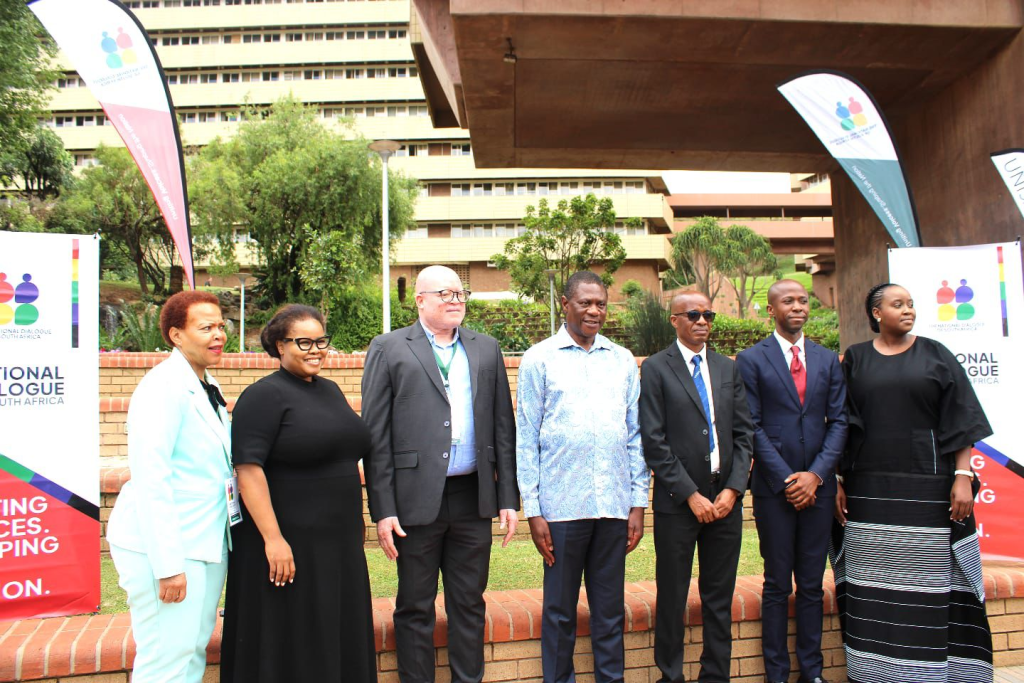
Following the high-level induction of the 99-member Steering Committee at the Unisa Muckleneuk campus this past weekend (January 17–18, 2026), Tengile was selected as one of 20 leaders tasked with the day-to-day management of the National Dialogue’s strategic rollout.
The “Engine Room” of the National Dialogue
While the broader Steering Committee provides overarching governance, the 20-member Interim Task Team functions as the project’s “engine room.” This group is responsible for the immediate, hands-on operational work required to facilitate a nationwide, citizen-led conversation. Their mandate includes:
- Daily Coordination: Overseeing Secretariat staff at NEDLAC to ensure the smooth execution of provincial and ward-level dialogues.
- Operational Infrastructure: Finalizing public participation guides and ensuring linguistic accessibility for rural participants.
- Stakeholder Liaison: Acting as a bridge between the 99-member Steering Committee, the Eminent Persons Group (EPG), and the Presidency.
A Strategic Win for Townships and Rural Areas
Tengile’s inclusion in this 20-person task team is a significant victory for the Small Businesses, Stokvels, and Informal Economy sector. By having a seat in the “day-to-day” leadership, she ensures that the logistical and structural barriers facing rural entrepreneurs—such as digital access and transport—are addressed at the earliest stages of the dialogue’s design.
This appointment directly aligns with her TREDA 2026 Program of Action (POA), particularly the “Activate” mandate, which seeks to convert informal productivity into structured, investable industries. Her role in the ITT allows her to ensure that the National Dialogue is not just a high-level debate, but a practical vehicle for inclusive economic transformation.
Synchronized Leadership: The Week Ahead
The appointment to the ITT adds a significant new layer to Tengile’s schedule. As she prepares to deliver the TREDA Sectoral Address this Thursday, January 29, she now speaks not only as a development CEO but as a central architect of the nation’s most significant consultative process since 1994.
Stakeholders can expect her upcoming address to reflect this new responsibility, providing a unique perspective on how the 7,500 SMMEs and student entrepreneurs targeted by TREDA in Q1 can participate in the National Dialogue.
Categories of Leadership and Strategy
To understand Qhamisa Tengile’s current responsibilities, her work can be categorized into these three primary frameworks:
1. The TREDA Mandate (Economic Strategy)
- ACTIVATE (50% Focus): Unlocking the “real economy” by converting informal productivity into structured industries.
- ACCELERATE (30% Focus): Scaling growth through technology, finance, and infrastructure (e.g., agri-nodes and digital marketplaces).
- ASCEND (20% Focus): Moving communities toward ownership and generational wealth.
2. The 15 Priority Areas for 2026
TREDA has identified 15 specific sectors, with seven being prioritized for the first quarter of 2026:
- Sectors: Agriculture, Oceans Economy, Manufacturing, and Tourism/Arts.
- Support: Formalization, Mentorship, Resource Mobilization, and Infrastructure.
3. National Dialogue Participation
- Representative Sector: Small Businesses, Stokvels, and the Informal Economy.
- Governance Roles: Member of the 99-person Steering Committee and the 20-member Interim Task Team.
- Q1 Targets: 3,000 Student Entrepreneurs and 4,500 Township/Rural SMMEs.

I welcome the initiative ,willing to help when required to do so.