
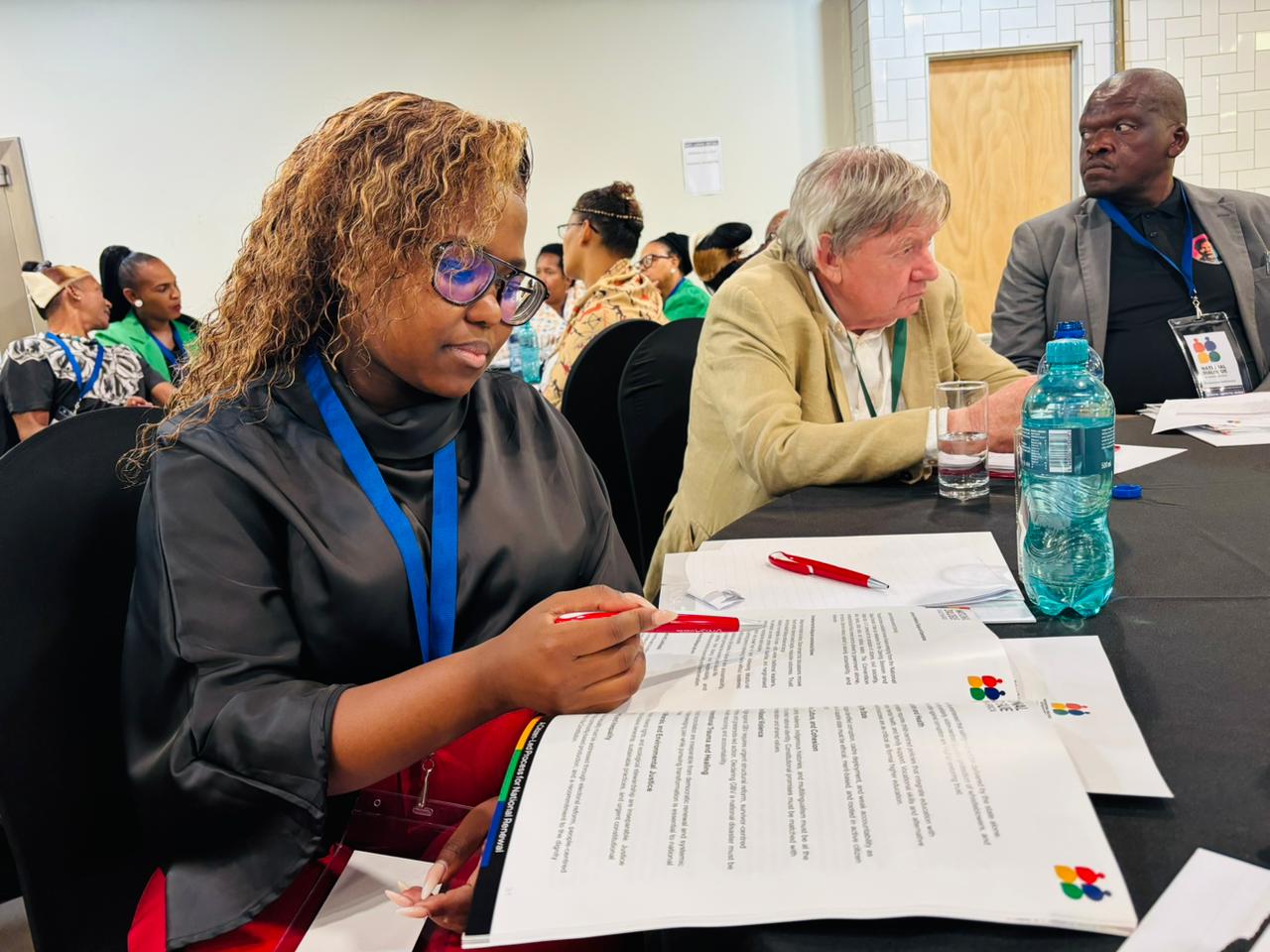
Today, January 17, 2026, marks a watershed moment for the inclusion of South Africa’s informal and rural economies in national policy. Qhamisa Tengile, the National CEO of the Township and Rural Economic Development Agency (TREDA), has officially taken her seat as a member of the National Dialogue Steering Committee during its inaugural induction at the University of South Africa (Unisa) Muckleneuk campus.
Tengile joins a 99-member body described by President Cyril Ramaphosa as the “architects of our future,” tasked with guiding a citizen-led process to solve the nation’s deepest socioeconomic challenges.
A Seat for the “Invisible Economy”
In a significant recognition of her expertise, Tengile was confirmed by the Presidency in December 2025 as a representative for the Small Businesses, Stokvels, and Informal Economy sector. Her presence on the committee ensures that the millions of South Africans operating in townships and rural hubs are no longer on the periphery of the national conversation but at the very center of a new social compact.
Her participation comes at a critical time for TREDA, which is preparing to launch its 2026 Quarter 1 Program of Action (POA) on January 22. Tengile’s dual role allows her to bridge the gap between high-level governance and the grassroots “Activate” mandate of TREDA, which focuses 50% of its effort on converting informal productivity into structured, investable industries.
Key Highlights: Day 1 of the Induction
The first day of the two-day event focused on orienting the 99 nominees on their immense responsibilities. President Ramaphosa, addressing the committee virtually, emphasized that while the state convenes the dialogue, it will not dictate the results.
The Four Strategic Priorities for 2026:
- Radical Inclusivity: Ensuring that every sector—from LGBTQIA+ groups to rural traditional leaders—has a platform to be heard.
- Citizen-Led Mandate: The outcomes must reflect the collective views of ordinary citizens, not political or state interests.
- Effective Governance: Establishing rigid ethical standards and decision-making protocols to steward the process’s integrity.
- Public Trust: Rebuilding confidence through transparent reporting and a public log of priority issues.
Synergy with TREDA’s “From Margins to Merit”
The induction’s focus on “Practical Roadmaps” and “Linguistic Accessibility” mirrors Tengile’s own strategy at TREDA. As the National Dialogue prepares for a “bottom-up” phase involving ward-based conversations, TREDA is simultaneously readying roadshows to Umlazi, Soweto, and Tembisa to affiliate 7,500 SMMEs and student entrepreneurs in the first quarter of the year.
Tengile’s role in the Dialogue Labs, particularly those focused on a “Dynamic, Inclusive Economy,” aligns with TREDA’s Accelerate (30%) and Ascend (20%) pillars, which aim to scale growth through technology and secure generational wealth for township-based suppliers.
The Road Ahead
The induction concludes tomorrow, January 18, 2026, setting the stage for 6 to 8 months of nationwide engagement. For Tengile, this is a precursor to a busy week ahead; following the conclusion of the National Dialogue’s orientation, she will return to TREDA to deliver the agency’s Sectoral Address this coming Thursday, January 22, where she will unveil the full details of the Digital SMME ‘One-stop-shop’ and the 2026 SMME Incubator.
“This dialogue is more than a series of meetings,” Tengile recently remarked. “It is about making the township economy a merit-based participant in South Africa’s future.”
