
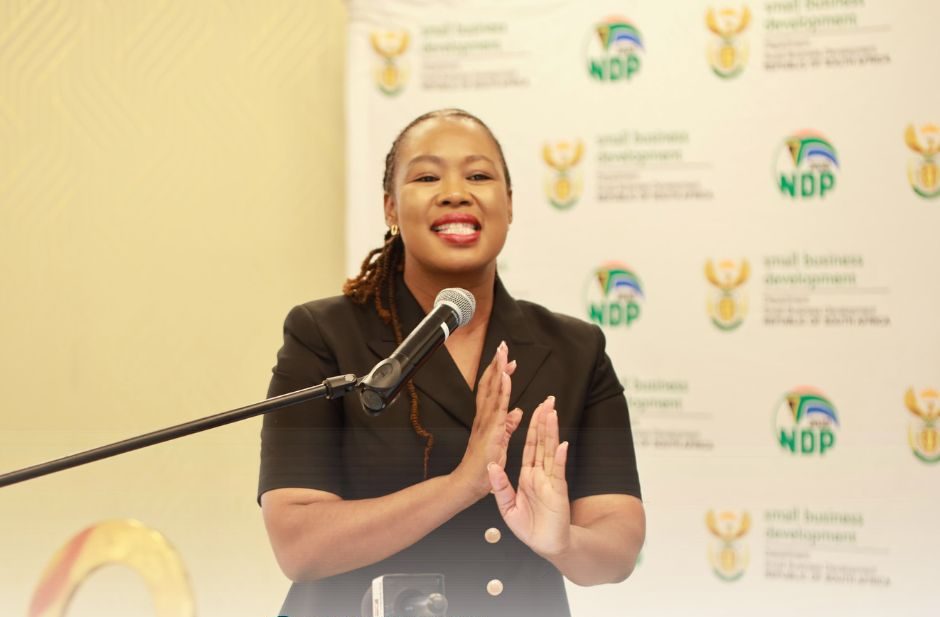
Eastern Cape – The Township Economy Development Association (TREDA) continued its high-impact engagement on the Business Licensing Bill, 2025 by participating in the Minister’s Eastern Cape Public Commenting Session on 25 November. This crucial ‘DAY 2’ coincided with the start of South Africa’s 16 Days of Activism Against Gender-Based Violence (GBV), a convergence TREDA deliberately leveraged to fuse its economic mandate with the fight for social justice.
The session, attended by SMMEs, the Minister, and department officials, was defined by a powerful blend of economic advocacy and a principled stand against violence.
The Economic Agenda is a GBV Agenda
Before the policy discussions commenced, TREDA took a profound moment to acknowledge the gravity of the GBV crisis, framing the economic discourse within a humanitarian context:
- 🕯️ Candle Lighting for Survivors: A solemn tribute to those who have endured gender-based violence.
- 🙏 A Prayer for Protection and Justice: A commitment to a safer future for all citizens, especially women and children.
- 🛑 A Mini Demonstration Against GBV: A visible and vocal show of solidarity.
For TREDA, this was not merely a symbolic gesture. The organisation drove home the principle that economic security is violence reduction:
“Strengthening a woman entrepreneur is prevention; empowering a survivor is protection; building economic security is violence reduction.”
By integrating the economic fight with the #EndGBV campaign, TREDA established that legislative frameworks must address systemic vulnerabilities, including the economic marginalisation that often traps women in abusive situations.
Advocating for “Bold Refinements” to the Bill
With the social principles established, the SMME voices rose, engaging the Minister on the Business Licensing Bill, 2025 with what was described as “clarity and courage.”
TREDA reaffirmed its foundational support for the Bill but delivered a firm position advocating for “bold refinements” to ensure the legislation serves the actual realities of the township and rural economy. The goal is to prevent the Bill from becoming an instrument of exclusion, complexity, and unaffordable compliance.
The written submission to the Department of Small Business Development (DSBD) is set to carry “every insight raised,” centered around several key proposals:
| Proposal | Objective |
| Tiered Licensing | To differentiate requirements and processes based on the size and nature of the business (e.g., street vendor vs. micro-manufacturer). |
| Affordable Fees | To ensure licensing costs do not prohibit the formalisation of micro-enterprises and spaza shops. |
| Inclusion Zones | To designate areas, particularly in townships and rural hubs, for simplified licensing and tailored support. |
| Recognition of Realities | A system specifically designed to acknowledge the operating conditions of traders, spaza shops, micro-manufacturers, and rural enterprises. |
No More Invisibility: From Margins to Merit
The core demand from TREDA is encapsulated in the powerful statement: “No more invisibility. No more survival without support.”
This relentless advocacy, continuing the “From Margins to Merit” campaign, aims to ensure that the Business Licensing Bill, 2025 fundamentally shifts the regulatory focus from control to enablement. The commitment to building a system that recognises and supports the economic contributions of the grassroots level is positioning TREDA as a key negotiator in the future of South Africa’s Township and Rural economy.
